
RMNP Wedding Permit Guide
Planning wedding photos in Rocky Mountain National Park can be confusing because the rules depend on whether you are having a ceremony in the park or only taking portraits. This RMNP wedding permit guide explains when couples need a Special Use Permit, when a separate photography permit is usually not required, where ceremonies are allowed, and what to know about timing, entrance fees, parking, and photography logistics inside the park.
Quick Answer: Do You Need an RMNP Wedding Permit?
Yes, if you are having a wedding, elopement, vow renewal, or ceremony inside Rocky Mountain National Park, you need a Special Use Permit from the National Park Service. If you are only taking portraits or wedding photos in the park and are not holding a ceremony there, most small still photography sessions with eight or fewer people do not require a separate photography permit, as long as the session follows park rules, uses public areas, and does not create additional impacts.
When you need an RMNP Wedding Permit
If you are having a wedding, elopement, or vow renewal ceremony inside Rocky Mountain National Park, you need a Special Use Permit from the National Park Service. RMNP requires this permit for ceremonies with two or more people, and ceremonies must take place at one of the park’s designated wedding locations. The park currently lists a $300 non-refundable administrative fee for each wedding permit application. 
When you do not need a separate photography permit
For portrait sessions or wedding photos that are not connected to a ceremony, RMNP says most still photography with eight or fewer people does not require a separate photography permit, as long as the session happens in public areas, uses hand-carried equipment, does not require exclusive use, and does not create additional impacts or administrative costs. Photographers and clients still need to pay entrance fees or show a valid park pass, and during the summer season, vehicles may also need a Timed Entry Reservation during certain hours.


Photography and videography are allowed under the approved Special Use Permit during the permitted ceremony period. After the ceremony, couples may go to other open areas of the park for photos without needing an additional photography permit, as long as they follow park rules, avoid exclusive use of public areas, and do not impact park resources or other visitors.
Drones are not allowed in Rocky Mountain National Park, even for weddings or licensed photographers.
How to apply for an RMNP wedding permit:
1. Choose your preferred date.
2. Choose one of RMNP’s designated ceremony locations.
3. Review the site’s guest count, vehicle limits, and seasonal restrictions.
4. Submit the Special Use Permit application to Rocky Mountain National Park.
5. Wait for approval from the park.
6. Pay the required administrative fee after approval.
7. Keep the approved permit with you during the ceremony.
8. Plan your photography timeline around parking, light, crowds, weather, and travel time inside the park.
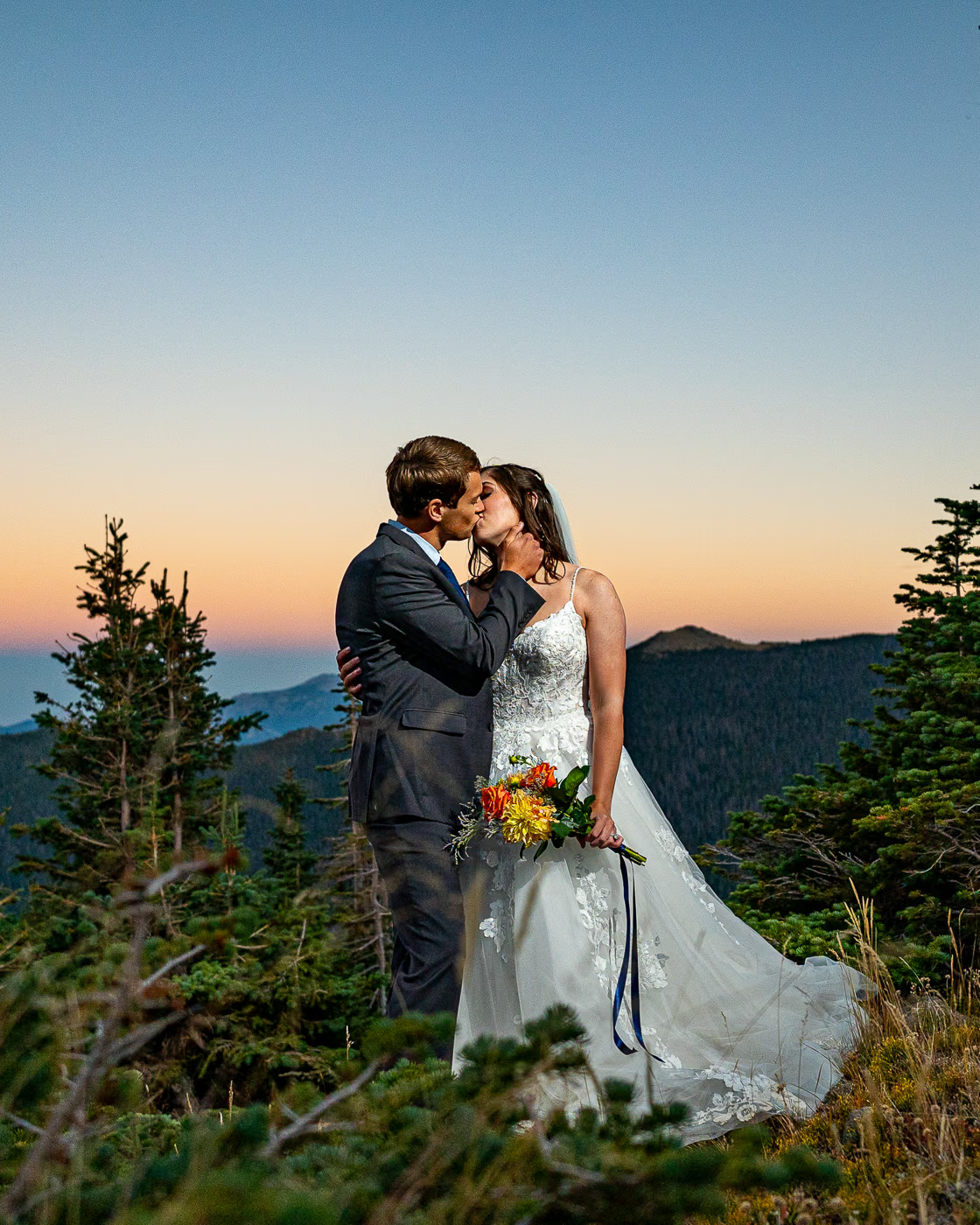
The most asked question, answered
"Do I need a permit to photograph in the park if it's not a wedding?"
If you are only taking portraits in RMNP and are not holding a ceremony in the park, most small still photography sessions do not require a separate photography permit, as long as the session takes place in areas open to the public, uses hand-carried equipment, does not require exclusive use, does not impact park resources or visitors, and does not create additional administrative costs for the park.
Where Wedding Ceremonies are allowed in RMNP
Rocky Mountain National Park currently allows wedding ceremonies only at designated ceremony sites, and each site has its own guest and vehicle limit. The group size includes everyone present: the couple, guests, children, officiant, photographers, videographers, planners, and any other vendors. According to the National Park Service, the largest ceremony size currently allowed at any RMNP wedding site is 30 people, and all ceremonies are limited to a maximum of two hours at the ceremony location. 
3M Curve allows up to 15 people and 3 vehicles. This site is a rocky overlook area on the east side of Rocky Mountain National Park with views of mountains, meadows, and moraines. Because it has uneven terrain, no restrooms at the site, and limited parking, it works best for very small ceremonies where guests are comfortable walking on natural surfaces. 
The Alluvial Fan allows up to 20 people and 5 vehicles. This area is known for water, rocks, and mountain scenery, making it a good fit for couples who want a more rugged RMNP setting without choosing one of the larger meadow locations. Because the group size is limited, it works best for intimate ceremonies with a small guest count. 
Bear Lake allows up to 20 people and 5 vehicles, but it is a winter-only ceremony site and weddings are not permitted there on weekends. Bear Lake is one of the most iconic locations in Rocky Mountain National Park, but it is also heavily visited, so the park limits wedding access to protect the area and reduce crowding during the busiest seasons. 
Copeland Lake allows up to 30 people and 10 vehicles. This is one of the larger RMNP ceremony options and can work well for couples who want the maximum allowed guest count inside the park. Its higher vehicle limit also makes logistics easier than some of the smaller pullout or trail-based ceremony locations. 
Harbison Meadows allows up to 30 people and 10 vehicles. This is another larger designated ceremony site and is one of the few RMNP wedding locations that can accommodate the park’s maximum ceremony size. It is a good option for couples who want a meadow-style setting and a little more space for guests. 
Hidden Valley allows up to 30 people and 10 vehicles. This site can work well for couples who need one of the larger ceremony locations in RMNP and want a more open mountain setting. Its higher guest and vehicle limits make it more practical for ceremonies with family and a small group of guests. 
Lily Lake Dock allows up to 10 people and 3 vehicles. This is one of the smallest ceremony locations in RMNP, so it is best for true elopements or very intimate ceremonies. Because the guest count and parking are both limited, couples should keep the group simple and plan carefully around arrival, timing, and photography. 
Lily Lake Southside Picnic Area allows up to 30 people and 10 vehicles. This is one of the larger Lily Lake options and can accommodate the maximum RMNP ceremony size. It is also the only RMNP wedding site where the park notes that a simple picnic or food reception may be possible with an additional permit. 
Lily Lake Trail allows up to 20 people and 5 vehicles. This location offers views of Longs Peak, Lily Mountain, Twin Sisters, and the Mummy Range, with a trail setting around the lake. Ceremonies cannot take place at the dock or picnic tables under this permit, and groups should avoid blocking the trail for other visitors. 
Moraine Park Discovery Center Amphitheater allows up to 30 people and 10 vehicles. This is one of the larger ceremony sites in RMNP and has a more defined ceremony feel because it is an amphitheater-style location. It is also one of the few sites where dogs are permitted on leash, and the park allows arches at this location. 
Sprague Lake allows up to 15 people and 3 vehicles in summer, and up to 30 people and 10 vehicles in winter. The lake has views of the Continental Divide, a dock, boardwalks, and a trail around the water, but ceremonies cannot occupy picnic sites or block the trail. Because the limit changes by season, couples should be especially careful when choosing a date here. 
Timber Creek Campground Amphitheater allows up to 20 people and 5 vehicles, and it is closed in winter. This is the main designated ceremony option on the west side of Rocky Mountain National Park, making it useful for couples who want a less Estes Park-centered location. Because it is seasonal, couples should confirm availability before making plans around this site. 
Upper Beaver Meadows allows up to 30 people and 10 vehicles. This open meadow area has views of the Continental Divide and is one of the larger ceremony options near the east side of the park. Upper Beaver Meadows Road is typically closed to vehicles from mid-October to mid-May, and meadow closures can occur during elk rut season, so timing matters here.

How we help couples with RMNP wedding photos
Because we live in Estes Park, minutes from Rocky Mountain National Park, we help couples think through more than just the permit. We help with photo timing, mountain light, parking, weather changes, guest logistics, nearby portrait locations, and backup plans if the park is crowded or conditions change.
Every wedding includes both of us as two lead photographers, so couples have local guidance and two perspectives throughout the day.